EB-1A Media Evidence: What Immigration Lawyers Include in Every Criterion III Exhibit
For EB-1A Criterion III, a complete media evidence exhibit is substantially more than a printout of the article. USCIS adjudicators apply a two-part test: they evaluate whether the article covers the beneficiary substantively, and whether the publication qualifies as major media under 8 CFR §204.5(h)(3)(iii). Petitions that skip publication verification are the most common source of RFEs on this criterion — and the RFE is preventable with a standard exhibit structure that takes 2-4 hours to build manually (or 90 seconds with MediaProof).
This guide documents the professional standard for Criterion III exhibit preparation and provides a publication verification memo template for immediate use.
Why Adjudicators Need Publication Verification — Not Just the Article
For the underlying legal framework defining what qualifies, see EB-1A Criterion III: The Complete Guide. For the complete SimilarWeb documentation methodology, see How to Use SimilarWeb as EB-1A Evidence.
USCIS does not maintain an approved list of major media outlets. Officers evaluate qualification case-by-case using a totality standard that considers: audience reach, editorial independence, and standing relative to comparable publications in the beneficiary's field.
When you submit a Criterion III exhibit without publication verification data, the officer has no basis to conclude that the outlet qualifies. They have two options: approve based on unsupported assertion, or issue an RFE. RFEs on this criterion consistently request the same missing evidence: traffic data, comparative standing, and confirmation of editorial independence.
The adjudicator's framework for evaluating Criterion III has two questions:
- Is the article "about the alien" with substantive individual coverage?
- Does the publication qualify as "professional or major trade publication or other major media"?
The exhibit must answer both questions. Most attorney exhibits answer question one adequately. The publication verification package answers question two.
The 5-Tab Exhibit Structure
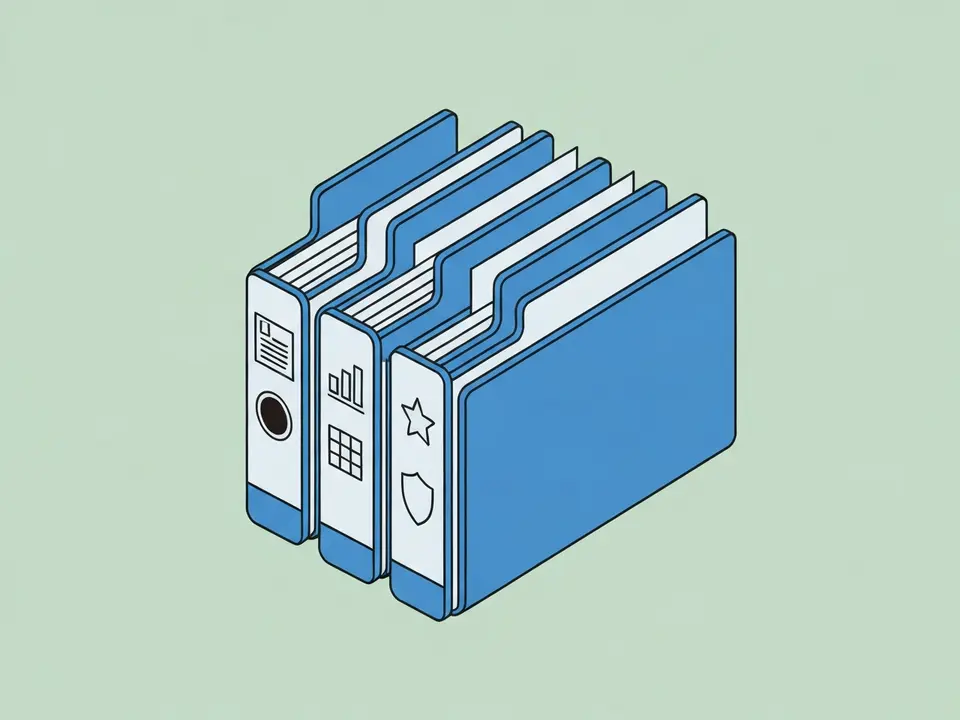 Legal petition binder with five labeled tab dividers for Article, Traffic Data, Comparison Table, Editorial Standards, and Supplementary Evidence
Organize every Criterion III media exhibit using this structure. The tab labels directly map to the five questions an adjudicator evaluates.
Tab 1: The Article
- Full printout of the article — not a screenshot of the headline or a URL alone
- URL clearly visible (use browser print settings to include the URL in the header/footer)
- Publication name, publication date, and author byline clearly visible
- Passages specifically about the beneficiary highlighted or flagged — do not leave the officer to find the relevant text independently
- If the article is paywalled: include the subscriber printout with full article text and visible URL
- If the article is in a foreign language: include both the original and a certified English translation (USCIS-certified translator, with translator competency certification)
- If the article has been updated since original publication: note the original publication date; include both dates if they differ
Tab 2: Traffic and Reach Data
- SimilarWeb Monthly Visitors screenshot (3-month view): the primary audience reach metric
- SimilarWeb Global Rank screenshot
- SimilarWeb Country Rank screenshot (especially for publications with a defined geographic focus)
- SimilarWeb Category Rank screenshot — the most important metric; shows the publication's position within its topic category (e.g., "Computers Electronics and Technology — Global, #54")
- All screenshots dated: visible date in the SimilarWeb interface or noted in an accompanying caption
- If SimilarWeb shows insufficient data (common for very niche or newer outlets): supplement with SEMrush organic traffic estimates or BPA/ABC circulation audit data
Note: Alexa Rank was permanently discontinued by Amazon in May 2022. Do not cite Alexa data in current petitions.
For the complete SimilarWeb documentation methodology, see How to Use SimilarWeb as EB-1A Evidence.
Tab 3: Comparative Standing Table
| Publication | Monthly Visitors | Global Rank | Category Rank | Notes |
|---|---|---|---|---|
| [Target Outlet] | [X]M | #[X] | #[X] ([Category]) | Subject of this exhibit |
| [Peer 1] | [X]M | #[X] | #[X] | |
| [Peer 2] | [X]M | #[X] | #[X] |
Source: SimilarWeb, [Month Year]
Selecting comparators: Choose publications covering the same topic area, not the largest news organizations globally. The goal is to establish rank within the peer category, not comparison against The New York Times. For a technology publication, compare against TechCrunch, The Verge, Wired, Ars Technica. For a business publication, compare against Forbes, Bloomberg, Business Insider. For a life sciences trade journal, compare against STAT News, Nature News, Fierce Biotech.
Written summary paragraph (required — include after the table):
"According to SimilarWeb, [Publication Name] receives approximately [X] million monthly visitors as of [Month Year], ranking #[X] globally and #[X] in the [Category Name] category — placing it among the top [N] [field/topic] publications worldwide by audience reach. This compares favorably to [Peer 1] ([X]M/month, Category Rank #[X]) and [Peer 2] ([X]M/month, Category Rank #[X])."
Tab 4: Editorial Standards Verification
- Screenshot of the publication's editorial team page, masthead, or About page — confirms a professional editorial staff exists
- Screenshot of editorial guidelines, submission policy, or ethics standards — confirms independent editorial process
- Confirmation the publication is not pay-to-publish:
- For any Forbes article: verify URL does not contain
/sites/[name]/(Contributor) or/councils/(Councils) - For any article: confirm no sponsorship or advertisement labels
- For trade journals: document peer-review or editorial board composition if applicable
- For any Forbes article: verify URL does not contain
- If the outlet is a digital-only publication: confirm from the About/Masthead page that it employs staff journalists, not only contributor writers
Tab 5: Supplementary Credibility Evidence
This tab is optional for Tier 1 and Tier 2 publications but recommended for Tier 3 or borderline cases:
- Publisher's Wikipedia article (for well-known outlets) or a news industry database listing
- Industry awards the publication has received (journalism awards, industry recognition)
- Evidence of the publication being cited by other major news organizations
- For niche trade publications: professional association endorsements, conference sponsorships, or editorial advisory board credentials
- If available: prior EB-1A approvals citing the same outlet (the approval notice can be referenced to show adjudicator recognition)
The Publication Verification Memo
The verification memo is a one-page document that goes inside the exhibit (typically at the top of Tab 2 or as a separate Tab 5 summary). Its function is to synthesize all data into a qualification argument that the adjudicator can read in 60 seconds.
Template:
PUBLICATION VERIFICATION MEMO
Publication: [Publication Name] | Domain: [domain.com]
Audience Reach: [Publication Name] receives approximately [X] million monthly visitors as of [Month Year], according to SimilarWeb. Global Rank: #[X]. [Country] Rank: #[X]. [Category] Category Rank: #[X].
Comparative Standing: [Publication Name] ranks higher than [Peer 1] ([X]M/month, Category Rank #[X]) and [Peer 2] ([X]M/month, Category Rank #[X]) among [field/topic] publications in the same category. SimilarWeb data is attached.
Editorial Standards: [Publication Name] operates under an independent editorial staff led by [Editor Title]. The publication employs staff journalists who independently assign, research, and edit content. [Publication Name] is not a pay-to-publish or open contributor platform. Editorial guidelines are attached.
Qualification: [Publication Name] qualifies as [major media / professional publication / major trade publication] under 8 CFR §204.5(h)(3)(iii) on the basis of its audience reach (top [N] in the [Category] category globally), editorial independence (professional newsroom with staff journalists), and comparative standing (outranking the majority of [field] publications by monthly audience).
Data sourced from SimilarWeb, [Month Year]. Screenshots attached.
Customize the memo for each publication. For Tier 1 outlets, a shorter version is sufficient.
Evidence Strength by Publication Type
| Publication Type | Evidence Required | Estimated RFE Risk |
|---|---|---|
| Top-tier national (NYT, WSJ, Bloomberg, AP) | Article printout + optional brief traffic notation | Very Low |
| Forbes editorial (staff-written, standard URL) | Article printout + optional SimilarWeb note | Very Low |
| Major category leader (TechCrunch, Business Insider, Wired) | Full 5-tab exhibit | Low |
| Industry trade journal (STAT News, Law360, IEEE Spectrum) | Full 5-tab exhibit + field comparison context | Medium |
| Regional or niche outlet (city business journal, specialized trade) | Full 5-tab exhibit + expert declaration | Medium-High |
| Forbes Contributor, Forbes Councils | Do not submit — not qualifying evidence | N/A — disqualified |
| Press release or wire content | Do not submit | N/A — disqualified |
RFE Prevention Checklist
Use before filing each Criterion III exhibit:
- Article printout includes URL, date, and author name — all visible on the printout
- Article is "about" the beneficiary as a primary subject (not merely a mention or company coverage)
- SimilarWeb monthly visitors, global rank, country rank, and category rank documented and dated
- Comparison table includes 2-3 peer publications in the same topic category
- Comparison table is accompanied by a written interpretation paragraph
- Editorial standards documentation included (masthead, editorial guidelines, and pay-to-publish confirmation)
- Publication is not a Forbes Contributor or Councils article (URL verified)
- For foreign-language articles: certified translation included
- For paywalled articles: subscriber printout with full text and visible URL
- Publication verification memo drafted and included in the exhibit
For the complete criterion-by-criterion documentation checklist, see the EB-1A Criterion 3 Checklist.
Tools for Publication Verification
SimilarWeb (primary): Monthly visitors, global rank, country rank, category rank. Free tier provides sufficient data for most publications. The category rank is the critical metric for field-relative arguments. Visit SimilarWeb.com and search the domain.
ABC/AAM (print publications): auditedmedia.com — free public search for AAM-audited print and digital publications. Download circulation snapshots as exhibit documentation.
BPA Worldwide (trade publications): bpaww.com — circulation audits for business and professional publications. Many industry trade journals are BPA-audited rather than AAM-audited.
SEMrush / Ahrefs (backup): Use when SimilarWeb shows insufficient data for niche publications. These tools provide organic traffic estimates and backlink metrics but lack category rank data. Use as supplementary data, not as replacement for SimilarWeb.
MediaProof: Automates the entire documentation workflow — SimilarWeb data capture, comparison table construction, editorial verification, interpretation paragraph drafting, and USCIS-formatted PDF exhibit assembly. Output time: approximately 90 seconds per publication. Complete exhibit package ready for petition filing.
Handling Edge Cases
Paywalled articles. Submit a full subscriber printout. The URL, date, and author must remain visible in the printed version. Include the URL separately to confirm the domain and publication identity. Paywalled publications often have higher editorial credibility than free-access sites — the paywall itself demonstrates a subscription audience willing to pay for access.
Limited SimilarWeb data. SimilarWeb's free tier may show insufficient data for very niche or newly launched publications. In these cases: (1) try SimilarWeb's "Overview" rather than detailed traffic data — even partial data is useful; (2) supplement with SEMrush or Ahrefs traffic estimates; (3) for print-primary publications, pivot to ABC/BPA circulation audits as the primary data source; (4) include an expert declaration from a field-specific media expert documenting the outlet's standing within its professional community.
Rebranded or acquired publications. When a publication has been rebranded (e.g., Business Insider's 2021-2023 "Insider" rebrand, or when a magazine is acquired and relaunched), note the publication history in the verification memo. The article's URL and original publication date remain controlling — add a brief notation: "[Publication] operated as '[Former Name]' from [dates], returning to its current name in [year]. The publication operates continuously with the same editorial staff."
Articles about the beneficiary's company or employer. Criterion III requires coverage "about the alien" — not coverage about their organization. An article about Company X that names the beneficiary as one of several employees or as a representative source does not independently satisfy the "about the alien" element. A feature with substantive individual coverage of the beneficiary — specific accomplishments, personal profile, extended biographical context — does qualify. Review the article carefully before including it and identify the specific passages that establish individual coverage.
Automating the Exhibit Workflow
For practices handling multiple EB-1A petitions, the documentation-intensive nature of Criterion III exhibit building — SimilarWeb research, comparison table construction, memo drafting, PDF formatting — creates significant paralegal time per exhibit.
For a complete walkthrough of the step-by-step manual process, see How to Prove a Publication Is Major Media for EB-1A.
MediaProof generates a complete, USCIS-formatted Criterion III exhibit for any publication in approximately 90 seconds — including SimilarWeb data capture, comparison table, editorial verification, interpretation paragraph, and PDF exhibit assembly. The output is structured to match the 5-tab exhibit format described in this guide.
Generate your Criterion III exhibit at mediaproof.co
Frequently Asked Questions
What do immigration lawyers include in EB-1A media evidence?
A complete Criterion III exhibit has five components: article printout, SimilarWeb traffic screenshots, comparison table with peer publications, editorial standards documentation, and a publication verification memo. Each article requires its own exhibit with all five components organized in labeled tabs.
Do lawyers need to prove a publication is major media for EB-1A?
Yes — for any publication that is not a universally recognized Tier 1 outlet. USCIS evaluates publication qualification case-by-case. Petitions without publication verification data are the most common source of Criterion III RFEs.
What causes an RFE on EB-1A Criterion III?
The top five causes: (1) no traffic or circulation data submitted, (2) article covers the beneficiary's company rather than the beneficiary individually, (3) Forbes Contributor or Councils article submitted as editorial evidence, (4) no comparison table with peer publications, (5) foreign-language article without certified translation.
How do immigration lawyers verify a publication for EB-1A?
Standard workflow: pull SimilarWeb data (monthly visitors, global rank, category rank); run same for 2-3 peers; screenshot with visible dates; build comparison table; screenshot masthead and editorial guidelines; draft a one-page publication verification memo. MediaProof automates this in 90 seconds.
What is the difference between Tier 1 and Tier 2 major media for EB-1A?
Tier 1 (NYT, WSJ, Bloomberg, Forbes editorial) is presumptively major — minimal documentation needed. Tier 2 (Business Insider, TechCrunch, Wired) clearly qualifies but requires a full 5-tab exhibit. Tier 3 (niche trade, regional) requires full exhibit plus expert declaration.
Can a paywalled article be used as EB-1A Criterion III evidence?
Yes, fully. Submit a subscriber printout with URL, date, and author visible. The Wall Street Journal, Bloomberg, and Financial Times are paywalled — the paywall has no effect on evidentiary value.
Last updated: April 2026
MediaProof Team — specialists in EB-1A media evidence documentation