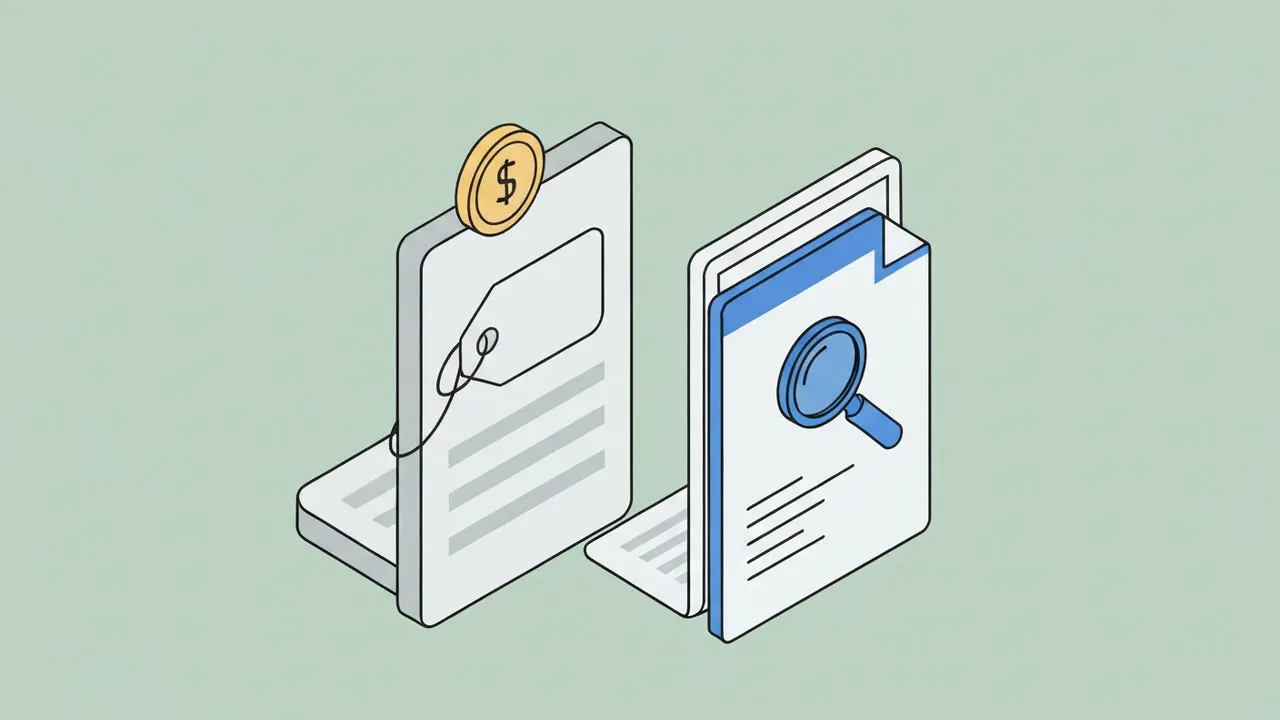
Paid Media vs. Editorial Coverage for EB-1A: Why USCIS Rejects Paid Placements
Paid press releases, sponsored articles, and Forbes Contributor posts do not qualify as EB-1A evidence — even when published on major platforms. USCIS specifically requires independent editorial coverage: articles written by journalists who independently decided to report on you, not articles you placed, purchased, or wrote yourself. This distinction is the single most common mistake in DIY EB-1A petitions, and correcting it after filing is expensive.
The Core Principle: Independent Recognition
EB-1A under 8 CFR §204.5(h)(3)(iii) requires evidence of "published material about the alien in professional or major trade publications or other major media." The operative word is about — coverage that someone else created to tell your story because they found it newsworthy.
The underlying logic of EB-1A is that extraordinary ability is measured by external recognition. USCIS is asking: has the professional world taken notice of this person's work? When you buy a press release or pay for a Forbes Contributor spot, you are not demonstrating that the world noticed you — you are demonstrating that you paid to appear somewhere. That is the opposite of what USCIS is evaluating.
This is why immigration attorneys describe the editorial/paid distinction as one of the most critical elements of Criterion III preparation. A petition built on purchased media may appear substantial — multiple Forbes links, business wire coverage across dozens of sites — and still fail at this threshold.
What Counts as "Paid" (and Why It Doesn't Qualify)
Paid press releases. Press releases distributed through PRNewswire, Business Wire, Globe Newswire, PR Newswire, or similar wire services are purchased distributions. The company or individual pays a fee to have the content syndicated across a distribution network. Even when press releases land on high-traffic news sites, they are not editorial. Many outlets have automated processes that publish wire content without any editorial review. USCIS can identify press release republications from their format, wire service attribution, and near-simultaneous appearance across unrelated outlets.
Forbes Contributor articles. The Forbes Contributor Network is an open platform where outside contributors write and publish their own articles on Forbes.com under their own bylines. Contributors apply for access, write their own content, and publish it — with minimal Forbes editorial oversight. The URL pattern /sites/[yourname]/ identifies all Contributor content. This is a self-publishing platform, not editorial journalism. See Does a Forbes Contributor Article Count for EB-1A? for the complete breakdown.
Forbes Councils content. Forbes Technology Council, Forbes Business Council, Forbes Finance Council, and similar organizations charge $2,500–$5,000 per year for membership that includes publishing rights on Forbes.com. Articles appear at /sites/forbestechcouncil/ or similar paths. Membership fees directly purchase the publication right — textbook pay-to-publish.
Sponsored and partner content. Any article labeled "Sponsored," "Partner Content," "Advertorial," "Presented by," "Brought to you by," or "Advertisement" is a paid placement. Publications sell these products as advertising revenue. They may be well-written and appear alongside editorial content, but the label disqualifies them entirely for EB-1A purposes.
Native advertising. Native ads are designed to resemble editorial content. Even without an obvious "Sponsored" label, they are paid placements. Publications are legally required to disclose native advertising, and the disclosure — however subtle — makes the content ineligible as Criterion III evidence.
Guaranteed placement packages. Some PR firms and "media relations" companies offer guaranteed placements: they promise your story will appear in specific outlets for a fee. This guarantee is only possible because they are buying the placement, not pitching it editorially. Any "guaranteed" coverage is, by definition, paid.
Pay-to-play award coverage. Some award programs operate by selling nominations or sponsorships, then generating press coverage of winners. When an award is structured around purchased participation rather than merit-based selection, the resulting coverage may also be tainted. This is fact-specific — some legitimate award programs are confused with pay-to-play programs.
The Gray Area: When Paid Assistance Gets Editorial Coverage
Not everything involving money is disqualified. The key question is: did a journalist or editor make an independent decision to cover you?
Hiring a PR firm is legitimate. A PR firm that pitches your story to journalists and editors is providing a service — media relations, strategic positioning, pitch writing — that does not compromise editorial independence. The journalist who receives the pitch still makes an independent decision: to assign the story, to interview you, to write the article. If the journalist independently decided to cover you (even after a pitch), the resulting article is editorial. The payment was to the PR firm for access and pitch services, not to the publication for a placement.
HARO/Connectively responses. Platforms like HARO (now Connectively) allow journalists to request expert sources. When you respond to a journalist's source request and the journalist includes you in their article, the result is editorial coverage — the journalist made the decision to include you based on your expertise.
Expert quotes in existing articles. When a journalist contacts you for an expert perspective and includes your quote in their article, that is editorial. The journalist initiated the contact and made the editorial decision to include your viewpoint. These quotes may not satisfy the "about the alien" element on their own, but they demonstrate editorial recognition.
Earned media from PR pitches. When a PR firm pitches your story and a journalist independently writes an article about you — the journalist assigns the story, conducts their own reporting, interviews you and other sources — the resulting article is editorial even though you hired the PR firm.
Red Flags USCIS Looks For
USCIS officers reviewing media evidence are trained to evaluate publication credibility. Red flags that can trigger RFEs or denials:
- Sponsorship labels anywhere in the article or its URL structure
- No journalist byline — article appears under your name or a company name
- Press release formatting — structured like a news announcement rather than a reported story
- Known pay-to-publish platforms — Forbes Contributor URLs, business wire services, guaranteed placement outlets
- Simultaneous syndication — identical article appearing on many unrelated sites on the same date (press release pattern)
- Lack of independent reporting — article contains no original journalism, only information from your press materials
- Article quotes only you — no third-party sources, no independent verification of claims
When an article shows multiple red flags, USCIS may issue an RFE challenging the entire Criterion III evidence package — not just the specific article.
Borderline Cases and How to Handle Them
Contributed expert articles (where a publication invites you to write a column) occupy ambiguous territory. These are different from the Forbes Contributor model — some publications maintain genuine contributed content programs with editorial oversight. The question is whether the publication's editorial team selected you to contribute based on your expertise and exercised oversight over what you wrote, or whether you bought the placement. Documentation of the editorial selection process can strengthen these cases.
Trade association newsletters and publications. Industry association publications can qualify under the field-relative major media standard, but only when they exercise independent editorial judgment. If a trade association publishes a profile of you because a staff editor assigned it, it may qualify as major media within the field. If you wrote the article yourself and submitted it to the association, it does not.
Interview-based articles where you pitched. If your PR firm pitched a story concept to a journalist and the journalist conducted independent reporting, wrote the article, and published it — the article qualifies regardless of whether you or your PR team initiated the outreach. The test is who wrote it and whether the journalist exercised independent editorial judgment.
Checking Your Media Evidence Before Filing
Before including any article in your EB-1A petition, confirm:
- Who wrote it? — A journalist with the publication's editorial staff wrote it
- Did you pay for the placement? — No payment to the publication or platform for the right to publish
- Is it labeled as sponsored or paid? — No sponsorship, advertisement, or partner content labels
- Does the URL indicate a pay-to-publish platform? — No
/sites/[yourname]/pattern or wire service distribution - Does the article contain independent reporting? — Journalist conducted research, interviewed third-party sources, made editorial decisions
For the underlying legal standard, see EB-1A Criterion III: Published Material. For how to evaluate whether a specific publication qualifies as major media, see What Counts as Major Media for EB-1A.
MediaProof automatically evaluates any article URL for editorial vs. paid indicators — checking URL patterns, byline structure, publication model, and sponsorship markers before generating any documentation exhibit.
Check whether your coverage qualifies at mediaproof.co
Frequently Asked Questions
Does paid media count for EB-1A?
No. Paid placements — press releases, sponsored content, Forbes Contributor posts, Councils content — do not qualify as Criterion III evidence. USCIS requires independent editorial coverage written by journalists who chose to cover you without payment for the placement.
Can a press release count as major media for EB-1A?
No. Press releases distributed via PRNewswire, Business Wire, or similar services are paid distributions, not editorial journalism. Even if republished on major news sites, they remain paid content and do not qualify.
Does working with a PR firm disqualify my coverage?
No. Hiring a PR firm for pitching, strategy, and media relations is legitimate. If a journalist independently decides to write about you after receiving a pitch, the resulting article is editorial. What disqualifies coverage is paying for the placement itself, not paying for pitching services.
Can I use a sponsored article for EB-1A evidence?
No. Sponsored articles — regardless of how well-written or where they appear — are paid advertising products. Any sponsorship label disqualifies the article as Criterion III evidence.
What is the difference between paid and editorial coverage for EB-1A?
Editorial coverage is written by a publication's journalists who independently chose to report on you. Paid coverage includes anything where the publication right is purchased — press release distribution, sponsored content, pay-to-publish platform access, or guaranteed placement packages. USCIS requires editorial coverage that represents genuine third-party recognition of your work.
Last updated: April 2026
MediaProof Team — specialists in EB-1A media evidence documentation